Turmeric – a root with medicinal properties
Turmeric
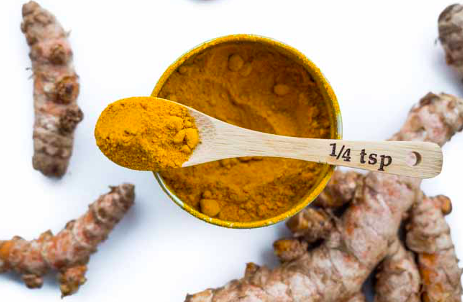
Turmeric (Curcuma longa, also known as Indian saffron) is a spice from the ginger family. It has a spicy aroma and a very intense yellow-orange colour, and gives dishes a slightly spicy, slightly bitter flavour. Turmeric has been used in India for thousands of years as an ingredient in many dishes and as a medicinal herb.
What immediately catches the eye when using fresh turmeric rhizomes is their intense aroma and, above all, their very strong colouring properties. Turmeric has such a strong colouring agent that it is difficult to wash off, even by scrubbing your hands. The main active ingredient is curcumin, to which turmeric owes its incredibly intense orange-yellow colour and many healing properties.
Turmeric is most commonly sold in powder form. However, you can also easily find the fresh rhizome of this wonderful spice in supermarkets or organic shops.
Curcumin
: Turmeric contains 2–5 per cent curcumin. Unfortunately, curcumin is poorly absorbed by the body. The solution is to take it together with black pepper. This is because black pepper contains the compound piperine, which significantly improves the absorption of curcumin. Turmeric is used in Chinese and Ayurvedic medicine. Curcumin is one of the most powerful antioxidants, with very strong anti-inflammatory, antiviral, antibacterial, cleansing and anti-cancer properties.
Anti-cancer properties
There are many studies confirming the effectiveness of turmeric in combating cancer cells. For example, there is a difference in the incidence of cancer in India, where turmeric is the main spice, and in countries where turmeric consumption is much lower.
Strong anti-inflammatory
effect Studies have been published demonstrating the powerful anti-inflammatory properties of the ingredients in turmeric. Whilst it is true that many plants have anti-inflammatory properties, this study showed that turmeric was more effective than the most popular medicines, aspirin and ibuprofen, with the added benefit that it did not come with a long list of side effects.
Protects the heart
: It has been shown in both humans and animals that curcumin significantly reduces platelet aggregation and can therefore offer protection against the formation of dangerous blood clots. Turmeric may help prevent clots from forming in blood vessels. A study found that the ingredient which gives turmeric its intense colour may help prevent fat from accumulating in the arteries. Curcumin may help prevent the development of atherosclerosis and blockages in the arteries, which are key factors in heart attacks and strokes.
Promotes the appearance and health of the skin
. Thanks to its antioxidant power and anti-inflammatory properties, turmeric is a fantastic ‘cosmetic’ for the skin. Not only does it help combat skin problems such as acne or speed up wound healing, but turmeric also makes your skin more radiant.
Turmeric for non-specific bowel inflammation
Inflammatory bowel disease (IBD) affects several million people. The most common forms of this condition are Crohn’s disease and ulcerative colitis. The exact cause of this condition is unknown, but it is known that diet and stress have a significant influence on it. A detailed analysis of numerous studies into the effects of turmeric on ulcerative colitis has led researchers to conclude that patients who take curcumin in combination with a medicine called mesalazine experience far fewer relapses and less worsening of symptoms compared with people who have not taken curcumin.
Turmeric is an effective painkiller
. One of the widely reported properties of turmeric is its ability to relieve pain. Turmeric is often referred to as ‘the painkiller’. Its pain-relieving properties are largely associated with a strong anti-inflammatory effect. When inflammation is reduced, the pain is also alleviated.