Plant of the month: Hippophae rhamnoides (sea buckthorn)

The weather these months is not doing us any favours. Outside the window, it is raining and freezing. During this time, it is worth paying particular attention to health and immunity. In this issue, we travel to Eastern Europe, where this remarkable plant is very popular and has been used for generations to prevent colds and flu.

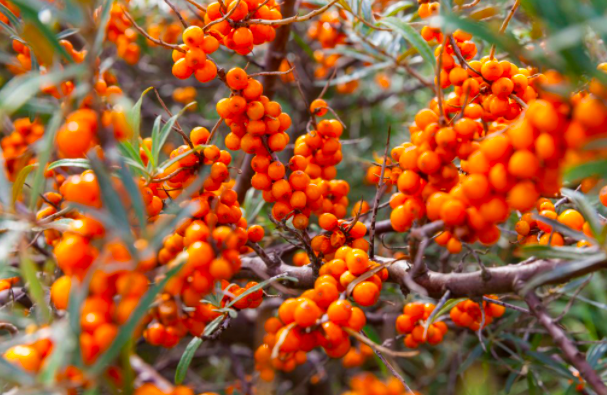
A small, orange-coloured fruit with a tart flavour that is also packed with vitamins: we’re talking about sea buckthorn. The Latin name for the species is derived from a combination of the Greek words hippos (horse) and phao (to shine), because in ancient Greece, sea buckthorn berries were fed to horses to give them a glossy coat.

Sea buckthorn is used both in cooking and in cosmetics due to its exceptional health and nutritional properties. ‘The gold of Siberia’ – as the Russians call it – contains more than 190 bioactive substances that have a positive effect on health.
Sea buckthorn berries, leaves and oil extracted from the pulp or seeds are used for healing and skincare.

Properties
Sea buckthorn is a treasure trove of vitamins B, C, F, P, PP, E and provitamin A in the form of carotenoids. It is also rich in tannins, mineral salts, phospholipids, organic acids and phenolic compounds, including flavonoids and amino acids. For this reason, sea buckthorn is recommended for all conditions caused by vitamin C deficiency. It should be noted that the vitamin C in sea buckthorn berries is highly stable, as it hardly breaks down during processing (for example, during preservation) and storage. This is due to the absence of an enzyme that breaks down ascorbic acid in sea buckthorn.
Source: deliciousmagazine.nl

Uses
Sea buckthorn berries are often used in cooking – they are suitable for making, for example, juices, jam, marmalade and jellies.

Modern phytotherapy recommends the oral use of sea buckthorn oil for heartburn, as well as for stomach and intestinal ulcers. In Eastern European hospitals, sea buckthorn oil is used to aid in the treatment of ulcers.

In naturopathy, sea buckthorn oil is also used to counteract the negative effects of X-rays and the toxic effects of medicines.

Sea buckthorn berries and leaf extract are used to treat inflammatory conditions due to their beta-carotene and flavonoid content.

Why is it worth including sea buckthorn in your daily diet?
Sea buckthorn supports weight loss thanks to its omega-7 fatty acid content; it increases feelings of fullness and reduces appetite. Serotonin and tryptophan improve mood and lower stress levels, thereby helping to prevent lifestyle-related diseases.

It is well worth incorporating sea buckthorn leaf extract into your daily diet, as it has a delicate flavour and aromatic scent. For example, sea buckthorn tea. This contains calcium, potassium, phosphorus, magnesium, iron, manganese and vitamin E. It is rich in large amounts of protein, lysine, methionine and cystine.

The minerals in the leaves facilitate the absorption of vitamins, strengthen tissues and prevent anaemia. Sea buckthorn leaf extract helps prevent flu, cardiovascular disease and damage to mucous membranes. Furthermore, teas made from sea buckthorn have powerful antibacterial, antiviral, anti-tumour and immune-regulating effects.

Good for your heart
: Vitamins C and E in sea buckthorn berries, along with plant sterols, lower levels of ‘bad’ LDL cholesterol, which leads to atherosclerotic changes. Furthermore, ascorbic acid alone has been shown to lower blood pressure.

The same properties are demonstrated by potassium, which is also present in these autumn fruits. Sea buckthorn is therefore recommended for people struggling with high blood pressure, as well as for the prevention of this condition.

Use in cosmetics
Sea buckthorn is orange in colour due to its high beta-carotene content. For this reason, it is a natural colourant added to all kinds of cosmetics – including hair colour rinses and self-tanners.

Sea buckthorn oil is also added to shampoos and hair conditioners because, thanks to its high concentration of polyphenols, vitamins and minerals, it restores the hair’s structure, thereby improving its elasticity and shine. In addition, hair care products containing sea buckthorn oil are used to help treat dandruff and hair loss, as the oil stimulates hair growth.

Sea buckthorn is also added to various creams, including those designed for the care of dry, ageing skin.