The effects and uses of various vitamins, minerals and herbs have often been discussed in our newsletter. But what exactly do we do with these ingredients before they leave our premises, processed into supplements? What processes take place beforehand? What, for example, is maceration, and in which end products do we use this technique? We’ll explain.
In phytotherapy, the term ‘macerate’ is often used, but what exactly is it? ‘Macerate’ comes from the verb ‘to macerate’, which literally means ‘to soften’ or ‘to soak’. This process allows soluble components of the herb to be extracted from the plant material, resulting in a potent remedy with a long shelf life. This technique has been in use for centuries, but how exactly does it work?
Take…
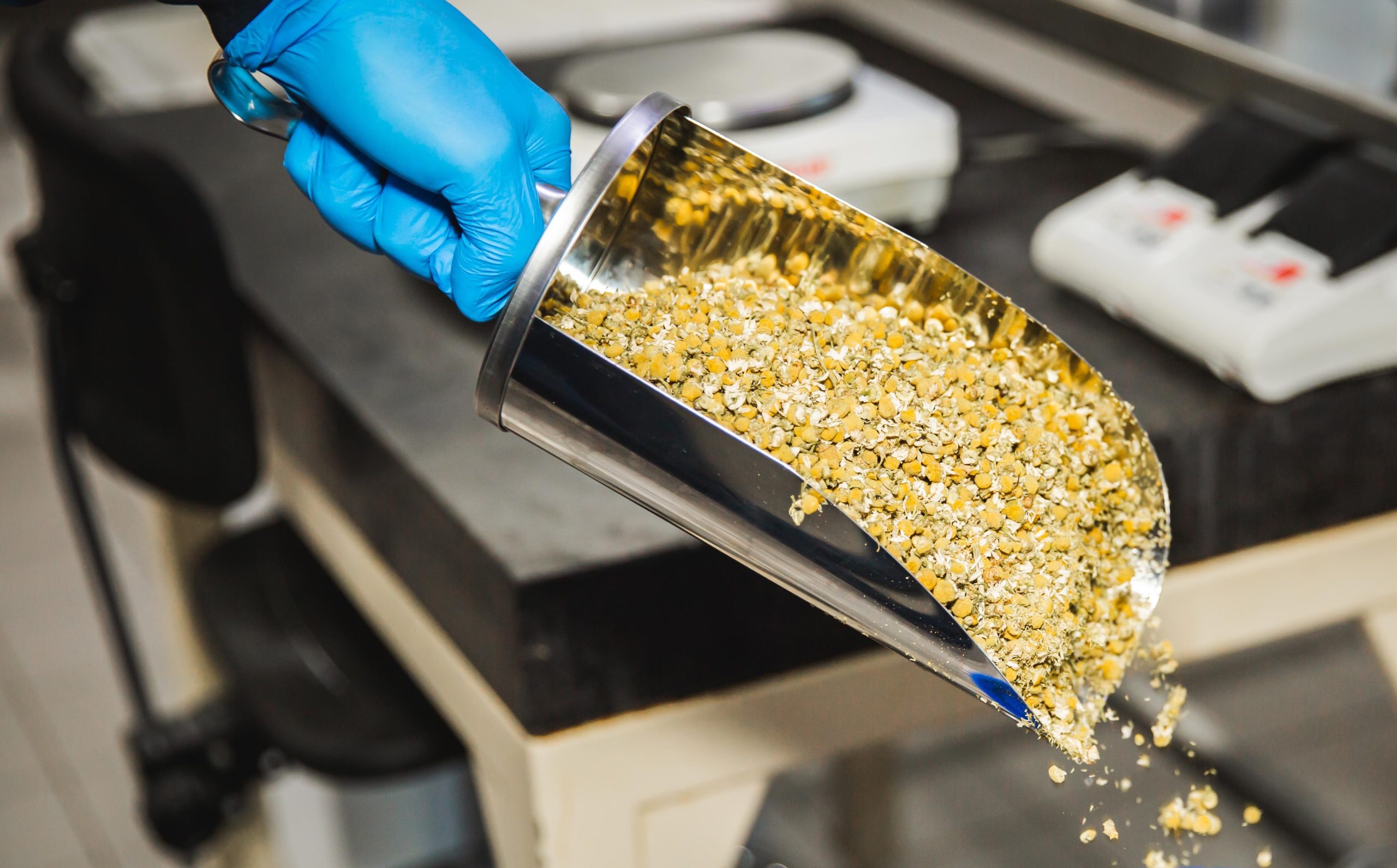
It begins with harvesting the chosen herb and cleaning it thoroughly. In cold maceration, we allow a mixture of herbs or parts of herbs – such as the leaves, flowers, stems or bark – to steep in a liquid at room temperature for a long period. This can be alcohol, glycerine or oil, although oil is not often used for maceration. A combination of alcohol and glycerine is also possible. At DuSart Pharma, we macerate using a commonly used 1:10 ratio, but a stronger 1:5 ratio is also available if required.
Making tea, but with a twist
With a 1:10 ratio, 1 part herbs is mixed with 10 parts alcohol, glycerine or oil. To extract the active components from the herbs, the mixture needs to ‘steep’ – or macerate – for a certain period of time. You can compare it to making a cup of fresh tea. We use a standard maceration time of 10 days in alcohol. This may vary depending on the maceration medium used. We can shorten or extend this time slightly if necessary. It is absolutely essential that the herbs are completely submerged in the liquid and remain thoroughly moistened. We therefore stir the mixture thoroughly during this maceration period.
Filtration
Once the time is up, the herbal mixture is pressed and then filtered. During filtration, the mixture passes through a filter, with the coarser particles being retained by the filter. The liquid, containing all its active ingredients, is then ready for further processing! More on that next time.