
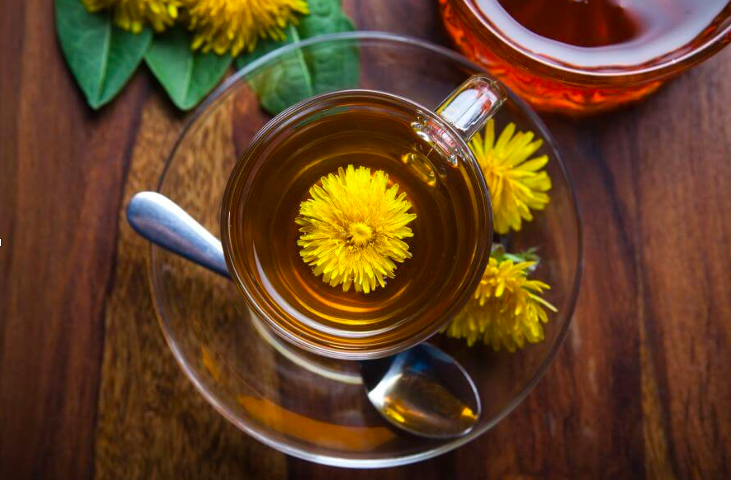
In the plant world, it is not uncommon for a weed to turn out to be a wonderful medicinal plant. Our ancestors studied quite intensively everything to do with plants commonly found in meadows and fields. Thus, the dandelion (Latin: Taraxacum officinale), often mistakenly called ‘field milkweed’ by many, has joined the group of plants used in medicine.
A history
of healing Once a plant shrouded in magic and mystery, it is now widely recognised, as in spring it covers all green spaces in abundance. It grows in meadows, grasslands, lawns and along roadsides. The ubiquitous dandelion is the enemy of perfectionism and pedantry. It can be a headache for owners of neatly mown, carpet-like lawns. Even when treated relentlessly with weedkillers, it manages to rise from the ashes like a mythical phoenix.
The scientific name is derived from the Greek word ‘taraxis’ = ‘eye inflammation’, which is clearly linked to its use. In the 10th century, the Arab physician Avicenna used dandelion sap to treat this condition. Over time and with scientific progress, interest in the medicinal properties of this unassuming plant grew. According to the Guide to Medicinal Plants, this plant gave rise to its own branch of naturopathy in the 20th century: ‘taraxacotherapy’.
The English and German names are derived from its physical characteristics. Dandelion – ‘lion’s tooth’, which refers to the shape of the leaves.
In folklore, dandelions are regarded as a symbol of life, reborn in a continuous cycle. This is due to characteristics such as: heliotropism, widespread occurrence, the closing of flower heads at night and their opening at sunrise, and great resilience to weather conditions.
Health
benefits: Dandelion is a raw material rich in active compounds that have therapeutic effects. Above all, it contains phenolic acids and polyphenols. It also contains sterols, potassium salts, triterpenes and inulin. These compounds have a purifying and detoxifying effect on the body and help combat micro-organisms such as Escherichia coli, Klebsiella pneumoniae, Pseudomonas aeruginosa and Staphylococcus aureus. They demonstrate the ability to bind to harmful metabolic by-products, exhibiting activity comparable to that of antioxidants.
Dandelion has a number of effects on our bodies. It stimulates bile secretion by the liver and facilitates the flow of bile through the bile ducts to the duodenum. In animal studies, a 40 per cent increase in bile secretion was observed following the administration of decoctions of fresh roots and a 5 per cent extract of leaves with roots. Consuming dandelion stimulates the appetite and the secretion of pepsin and hydrochloric acid in the stomach. Dandelion tea helps in the fight against excess weight, reduces
swelling and fluid retention, which promotes weight loss.
Due to its properties, dandelion is used in the treatment of many conditions. Its effects are described as mild, so its use is primarily supportive.
Use in cosmetology
: A dandelion compress immediately reduces redness and soothes inflammation. It is invaluable in the fight against acne. Rich in magnesium, it helps to improve the overall condition of the skin. The aforementioned antioxidant properties help combat free radicals, which means the ageing process is slowed down. Juice from dandelion leaves contains emollients that leave the skin smooth and moisturised.
Dandelion has a wide range of beneficial effects. Do not forget the side effects that may occur following use.